
HVAC Sales
What Is a Good HVAC Close Rate? Benchmarks and How to Beat Them
November 10, 2026 · 6 min read · by Adam Snider
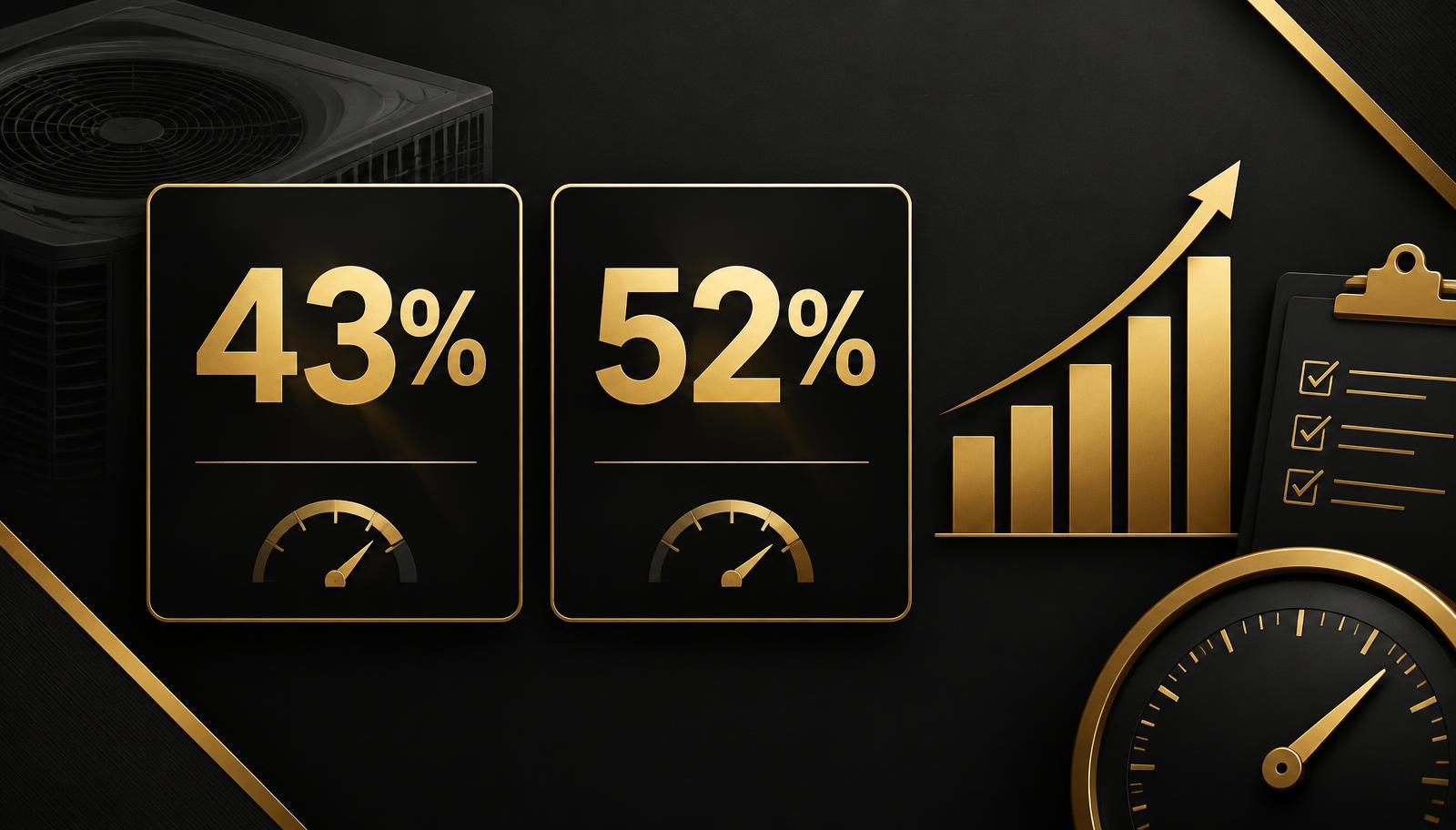
HVAC close rate benchmarks from the ACCA Contractor of the Future survey: 43% average, 52% with four or more options. See what moves the number and how to measure yours.
Original feature: Survey Reveals Strategies to Boost HVAC Close Rates by Double Digits on ACHR News ↗
Ask five HVAC owners for their close rate and you will get five guesses. Most companies feel busy, so the number must be fine. But "busy" and "closing" are different things, and the gap between an average HVAC close rate and a strong one is worth a surprising amount of money.
There is real benchmark data to compare against. The Contractor of the Future survey, conducted by the Air Conditioning Contractors of America with Farmington Consulting Group across more than 1,000 contractors, gives the clearest published picture of what HVAC companies actually close. ACHR News reported the findings in February 2026, and they are worth knowing before you judge your own team.
The Benchmark Numbers
According to the ACCA and Farmington Consulting survey, contractors close about 43% of their install jobs on average. Residential contractors close 45% of the time, while commercial contractors average 38%. The average service ticket in the survey was $422, with residential at $390 and commercial at $516.
So a good working answer is this: around 45% is the residential average, anything under 38% deserves a hard look, and the top performers in the same survey show what is realistically possible above that.
One caution before you compare. Close rate is not one standard number. Some companies divide sold jobs by raw leads, others by issued estimates or sat appointments. Two contractors can both claim 44% and mean completely different things. Before you benchmark against anyone, decide what your own denominator is: written proposals delivered on in home appointments is the most useful version for a residential HVAC company.
What Separates 42% From 52%
The same survey found a striking gap. Contractors who present four or more options in their proposals close at 52%, compared to 42% for those presenting one, two or three. Yet only 10% of surveyed contractors actually present four or more options.
Options work because a single price leaves the homeowner with a yes or no question and no context. Good, better and best choices turn the conversation into which one, not whether. Options can vary by equipment efficiency, controls, warranties, scope and payment structure.
Financing shows a similar pattern. Contractors who always offer financing close at nearly 50%, compared to 38% for those who do not. Only 37% of surveyed contractors remind every customer that financing is available. Presenting the full investment and the monthly payment side by side helps the homeowner evaluate the decision instead of stalling on the total. Our article on financing as a sales skill covers how to have that conversation without discounting.
Follow Up Is the Quiet Multiplier
Benchmarks measure the estimates that get decided. A large share of HVAC estimates never get a decision at all because nobody follows up properly.
Hatch analyzed more than 163,000 HVAC sales follow up campaigns and found that roughly half of all closes happen between the fourth and sixth contact with the customer. If your process ends at one estimate email and one phone call, you are leaving before half the wins happen.
A simple five touch sequence, same day recap, day two text, day three call, day five helpful detail, day seven final check, keeps the conversation alive without chasing. LSR's 5 Touch Follow Up Sequence is a ready to use starting point, and our practical HVAC sales process shows where follow up fits in the full estimate visit.
What Each Point of Close Rate Is Worth
The math is simple and worth doing for your own company. Take the number of in home estimates you run in a month, multiply by your average ticket, and that is the value of one point of close rate. A company running 60 replacement estimates a month at an $11,000 average ticket gains about $6,600 in sold work for every single point of improvement. Moving from 42% to 52% on those numbers is roughly $66,000 a month.
Use your own figures, not these. The point is that close rate is usually the cheapest revenue available to an HVAC company: you have already paid for the lead, the marketing and the drive time. Improving what happens in the home costs far less than buying more leads.
How to Measure Your Own Number Honestly
Pick one definition and stick to it: sold jobs divided by written proposals delivered, measured monthly. Then segment it. Track close rate by advisor, by lead source and by job type, because a blended number hides the leak. A technician turned over replacement on an aging system closes very differently from a cold internet lead, and lumping them together tells you nothing about who to coach.
Set a cutoff for unresolved estimates too. Decide how many days an estimate can sit unanswered before it counts as lost, otherwise your close rate drifts upward every month simply because old quotes never get closed out.
If you want the measurement installed properly, with dashboards, accountability and coaching behind it, that is exactly what our HVAC sales training and Sales System Build are built to do.
Find Out Where Your Number Stands
The benchmarks give you a target: 45% is average residential, 52% is what contractors presenting four or more options achieve, and disciplined follow up decides whether your estimates ever get the chance. The gap between where you are and where you could be is almost never a lead problem.
If you want a clear read on your own sales process, request a free Sales Engine Audit. It is a 30 minute, no obligation review of your pipeline, close rates and follow up, and it will show you which lever is worth pulling first.